
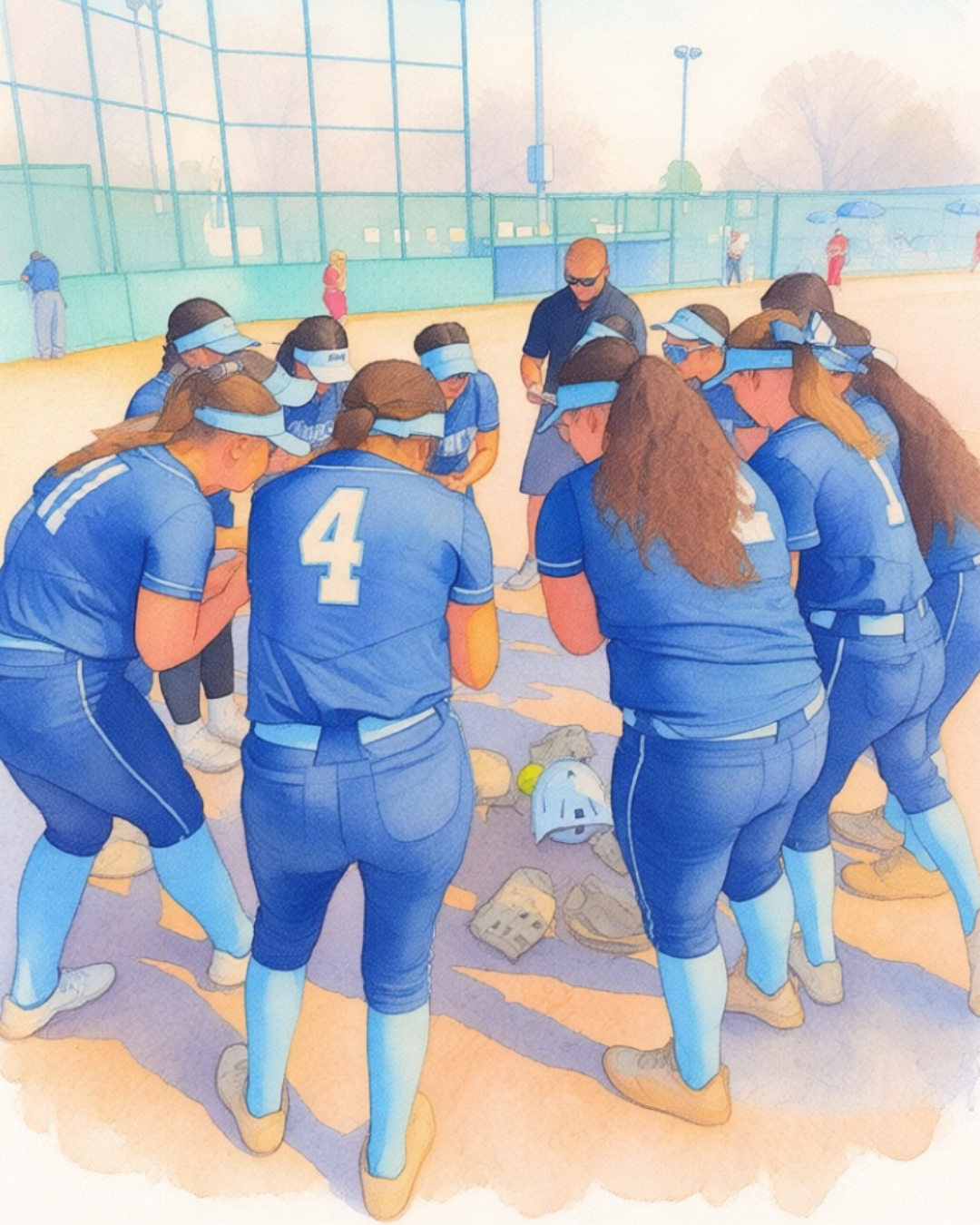
This week, as the high school fall sports season started to ramp up, I had multiple conversations with my players and their parents about how to balance playing high school and club sports.
As a high school coach, I encourage my athletes to play multiple sports. There are physical and mental benefits to cross-training, and I also don’t want my players to feel burned out or end up injured from doing too much of the same thing year-round.
It is easy for coaches to say we support multisport athletes. Taking it one step further and creating a pathway for athletes to actually do this successfully is a conversation that often gets skipped. But having a plan is an important part of making sure athletes actually experience the benefits of playing multiple sports.
For me, this is what an ideal plan looks like.
The in-season high school sport comes first.
Right now, many of my softball players are playing flag football, tennis, volleyball, or running cross country. It is an honor to represent their school, and while they are in season, I encourage them to shift their main focus away from softball and prioritize practices, games, and team activities for their school sport.
High school sports generally practice five days a week, so they naturally take up the majority of an athlete’s time. And when you spend the majority of your time doing one thing, other skills are going to get a little rusty.
I reminded my softball players of this this week. If they aren’t feeling as polished with their pitching or hitting right now, that is okay. Softball isn’t their primary focus at the moment.
I also reminded my players with perfectionist tendencies that their skills aren’t going anywhere. When they have more time to practice again, those skills will sharpen. There is no need to panic because you aren’t performing at your softball best while you are in the middle of another sport’s season.
Prioritize what complements the work you are already doing.
I also talked with my softball families about what to do if they have to pick and choose only one or two club activities each week.
First, rest needs to be part of the plan. Teen athletes are growing, going to school, practicing, competing, and managing full lives outside of sports. There will be times when an athlete needs to miss a club practice to get enough sleep or recover. That isn’t a lack of commitment. It is part of taking care of their body.
When deciding which club activities to prioritize, I suggest looking at what the athlete is already getting from their high school sport and using club training to supplement it.
For example, I have a pitcher who is playing tennis and club softball. Tennis is giving her a lot of agility, movement, and hand-eye coordination work. Because she is already getting those elements from tennis and high school, I suggested that if she needs to choose, she could occasionally miss a batting practice or conditioning session with her club team.
On the other hand, if her schedule allows her to attend weight training or pitching practice, those sessions could help round out her overall training.
The goal isn’t to cram every possible workout into the week. It is to look at the whole picture and figure out what the athlete actually needs.
Strength training should be a priority… but so should sleep.
Research from Paul Gamble has highlighted the importance of strength training for adolescent girls, particularly when it comes to injury prevention. I would add one important caveat: unless that strength training is happening at 6AM.
Sleep needs to be part of the training conversation for teenage athletes.
In The Teenage Brain, Dr. Jansen discusses the developmental changes that affect adolescent sleep patterns and performance. Teenagers’ brains are not wired to operate at their best in the very early morning hours. For many teens, 6AM isn’t a normal start to the day and may feel more like 3 or 4AM would feel for an adult.
So yes, prioritize strength training. But don’t automatically assume that more training is better if it comes at the expense of sleep.
Small amounts of practice still matter.
When athletes have limited time to dedicate to their out-of-season or club sport, I give them ideas for simple repetitions they can do at home that aren’t time-consuming or equipment-heavy.
For my pitchers, that might mean doing spins with their moving pitches. For hitters, it could be a few minutes of tee work. For basketball players, it could be shooting. For soccer players, it might be footwork or dribbling.
These small touches help maintain the feel for a skill.
They don’t need to recreate a full practice in their backyard. The goal is simply to keep some connection with the sport. When the season comes back around, they can spend their practice time rebuilding timing, decision-making, and game-specific skills rather than starting completely from scratch.
At some point, athletes may have to make choices.
Every high school athlete’s journey is different, and these are simply some of the suggestions I made for my players.
Ideally, I would love for athletes to have the opportunity to play multiple sports throughout all four years of high school. But there may come a point when an athlete decides it is time to specialize.
I usually have this conversation with families when an athlete feels like they are no longer in a position to give up club training or when club tournaments begin requiring them to miss high school games.
Often, this comes up when an athlete is pursuing college recruitment.
If an athlete is a sophomore or older and is making a serious push to be recruited in a particular sport, it may be time to have an honest conversation about priorities. They may decide that fully focusing on their club sport is the right choice. Or they may decide that playing high school sports is important enough to them that they are willing to be a role player rather than a starter.
There isn’t one right answer.
It comes down to the athlete’s goals and the experience they want to have during high school. Our job as coaches and parents is to help them understand the choices they are making rather than making those choices for them.
Coaches have to work together, too.
Finally, if we want high-level high school athletes to successfully play multiple sports, coaches have to be on the same page.
High school coaches need to understand the demands of club sports, and club coaches need to value education-based athletics and the experience of representing a school.
That doesn’t mean every coach will always get what they want. It means everyone recognizes that the athlete is the person we are all there to support.
A partnership between school and club coaches can make a huge difference. When coaches communicate, understand each other’s seasons and expectations, and keep the athlete’s long-term development in mind, multisport athletes have a much better chance of getting the physical, mental, and social benefits that come from playing more than one sport.
Being a multisport athlete shouldn’t mean constantly feeling like you are letting one coach down.
It should mean having the opportunity to experience different sports, develop different skills, build relationships with different teammates and coaches, and learn more about yourself as an athlete.
That takes more than coaches simply saying, “Of course, I support multisport athletes.”
It takes a plan.


