
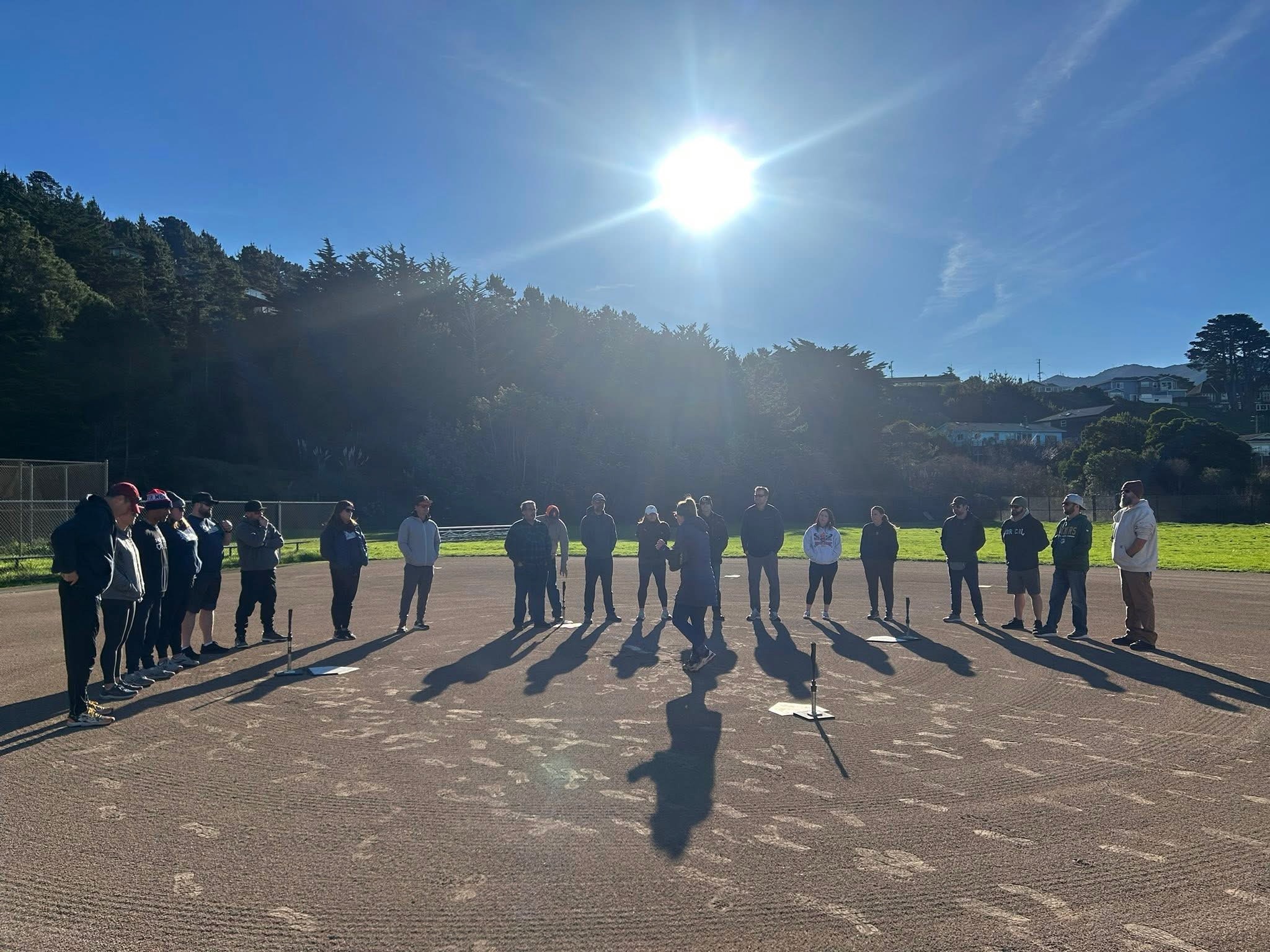
Last week, I led the Spring Coaching Clinic for the Pacifica Girls Softball League. This season, the league is implementing age-specific skill development standards and providing coaches with structured practice plans to support player growth. During the clinic, I shared practical tools and strategies to help coaches confidently and effectively implement those plans with their teams.
One important mantra I encouraged coaches to remember when working with a curriculum is this: your role is to support learning, not to run a perfect practice. From changing energy levels to varying player attendance, there are countless variables that can impact a practice plan on any given day. Rather than viewing these challenges as obstacles, coaches can treat them as opportunities to adapt.
A major focus of the clinic was how to set up practice spaces creatively to keep players engaged. Teams are often assigned limited space, and depending on field availability, one team may have infield dirt while another practices on the outfield grass. It is easy to fall into the trap of thinking that only certain skills can be worked on in each area. To counter this, I encouraged coaches to design multiple stations and have players rotate through them in a circuit, keeping everyone active and reducing time spent standing in line.
Creative Use of Space
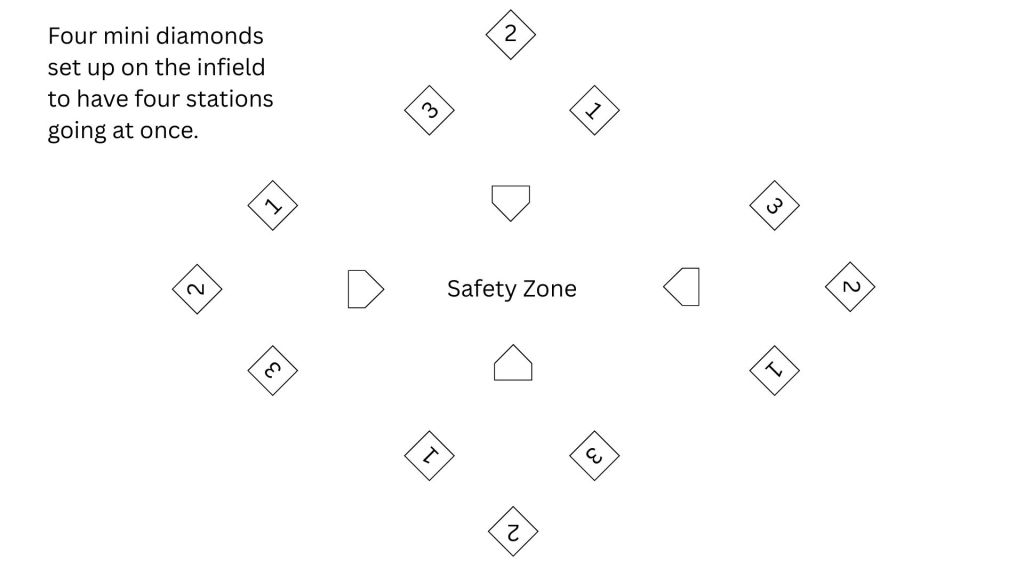
One strategy I was especially excited to share was how to create four mini diamonds within a standard infield. Each mini diamond includes a home plate, three bases, and a tee. This setup mirrors a regulation softball infield on a smaller scale, making it ideal for developing footwork and helping players learn where to go when the ball is put in play. Practicing in a scaled-down environment builds confidence and understanding, so when players transition to the full field, they already have a strong foundation for decision-making and throwing.
Beyond skill development, using smaller diamonds also encourages deeper learning and game awareness. For example, with four mini diamonds set up, each group of four players can take on specific roles: two on defense, one batter hitting off a tee, and one runner on first base. The batter’s goal is to hit a ground ball that advances the runner, requiring them to read the defense and choose where to place the ball. Meanwhile, the defense must work together to determine which base to cover and how to make the out. Both offense and defense are actively problem-solving and learning through game-like situations.
Advantages of This Coaching Tool
This method of teaching has many advantages, but my favorite is that it is fun. Players are playing the game on a small scale rather than listening to lengthy explanations. Coaches can present different scenarios for players to “solve” on their mini diamonds and adjust the level of challenge based on how quickly players grasp the concepts. For coaches working with a season-long curriculum, these mini games are an effective way to introduce and reinforce key skills and situations. Best of all, the setup is flexible, these diamonds can be created on dirt, grass, or even inside a gym during indoor training.
It was exciting to watch the Pacifica coaches experience “aha moments” throughout the clinic, especially when experienced coaches shared, “I’ve never thought of doing that before.” My hope is that thinking beyond traditional practice structures will help coaches feel more confident using their practice plans this season and support the growth for their players.
Thank you to the Pacifica Girls Softball League for the opportunity to work with your coaching community!


One Response
Wow, this is great. A fun way to do infield work with many working the bases and at bat together. Wonderful idea.