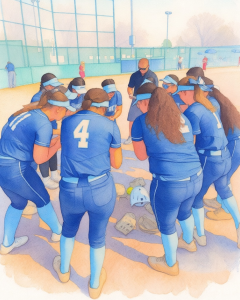
This week, I attended a virtual training session for coaches hosted by the Center for Healing and Justice Through Sport (CHJS). Their philosophy is simple but powerful: sports can be a vehicle for healing. Their workshops help coaches understand the science behind emotional regulation and how to create safe, inclusive environments where children can truly thrive.
This mission deeply resonates with me. I also believe that emotional safety is the foundation for learning, growth, and joy in sports.
The session focused on brain science and emotional regulation, both for athletes and for coaches. One of the key takeaways was that coaches must learn to regulate their own emotions before interacting with their teams. When a coach is emotionally dysregulated, they can’t fully support their players’ needs. The trainer also reminded us that it can take just one negative experience with a coach or teammate for a player to decide not to return. How coaches show up matters.
The most fascinating part of the training was revisiting the concept of Fight, Flight, or Freeze, a survival response most of us remember from Psychology 101, but this time, through the lens of sports.
Fight – Coaches were encouraged to recognize that “fight mode” doesn’t always look like physical aggression. It can show up as defiance, argumentativeness, or a refusal to follow team agreements. These are signs of a player who may be emotionally dysregulated, not disrespectful.
Flight – Traditionally, we think of “flight” as physically running away. But for today’s athletes, it can mean avoiding situations that feel unsafe or uncomfortable, like skipping practice, avoiding a conversation, or even taking long bathroom breaks during certain drills. Avoidance is a modern form of flight.
Freeze – This might be the most common survival response in sports. Think of the player who freezes up under pressure, forgetting plays, missing easy shots, or not swinging at any pitches. I used to chalk this up to inexperience, but the CHJS trainer reframed it as a trauma response to stress. The solution isn’t drilling skills harder, it’s helping the athlete feel safe enough to perform.
The trainer also introduced a fourth response I had never heard of: Flock. This happens when someone seeks safety by gravitating toward a familiar or trusted person. In sports, this might be a player who sticks close to a friend, or even the coach, because that’s where they feel most secure. I realized I’ve seen this many times before without recognizing it for what it was.
At the end of the day, everyone on the field is human. It was powerful to see how these deeply ingrained survival instincts show up in our teams, and how much influence coaches have on creating safety and belonging.
The CHJS training reminded me to lead with curiosity. When a player is struggling, they are often in fight, flight, freeze, or flock mode. Recognizing these responses helps me better understand what they need and how to support them with empathy.
If you’re a coach, I highly recommend checking out the Center for Healing and Justice Through Sport and attending one of their workshops. It’s a meaningful reminder that when we focus on healing and emotional safety, everyone, coaches and athletes alike, has a better chance to grow and thrive.